
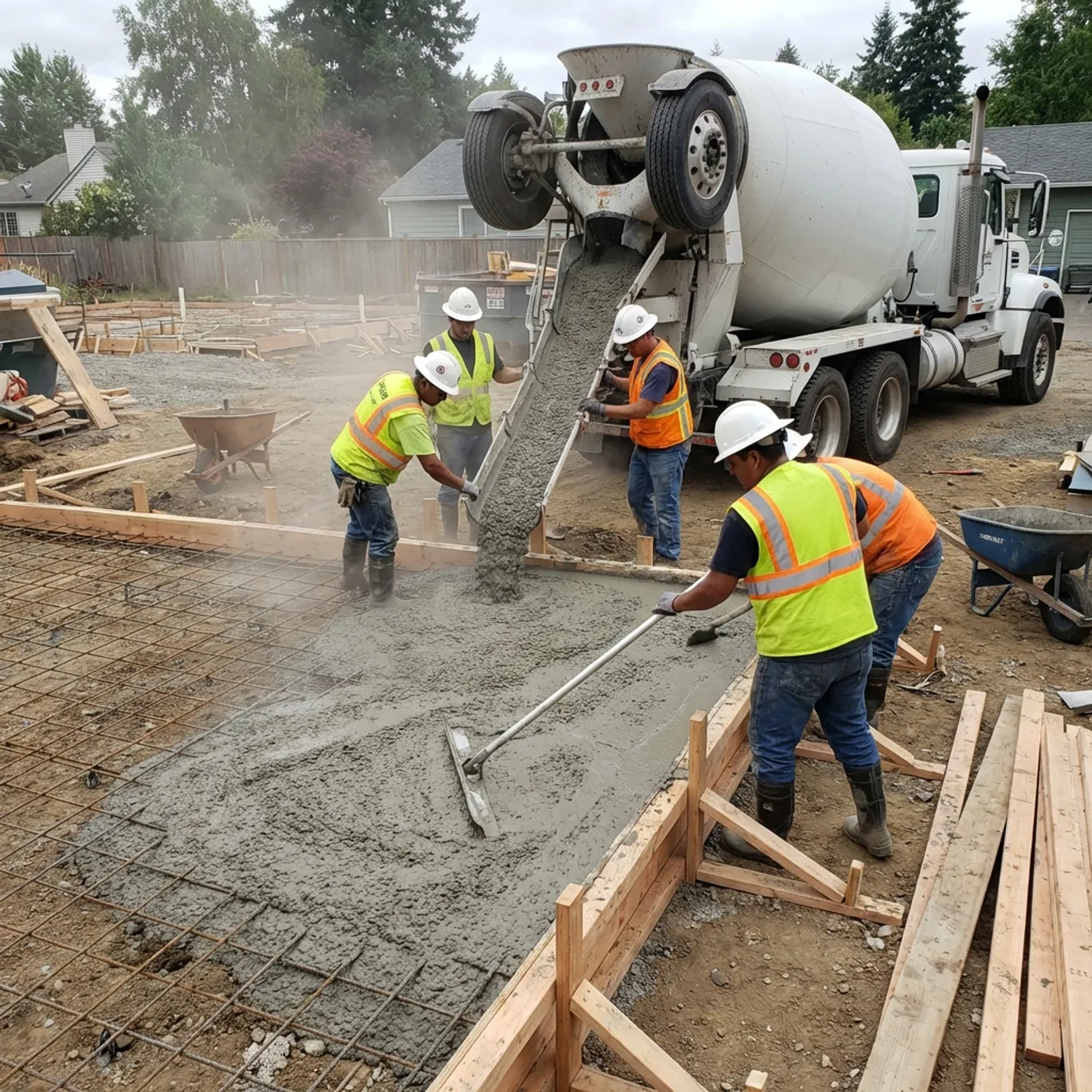
Huntsville Superior Concrete | Driveways, Patios, Foundations & Commercial Concrete for Residential & Commercial
Huntsville Superior Concrete is a third-generation family contractor with over 30 years of experience in concrete, specializing in residential driveways, stamped and decorative surfaces, and foundation work for homeowners and commercial clients alike. Our crews deliver patios and walkways, retaining walls, structural slabs, sidewalks and pool decks, with the same finishers on the job from form-up to final broom. From a single driveway replacement to a commercial slab pour, we've placed over 3,400 projects while maintaining a 96% customer satisfaction rating.
For existing concrete, we provide crack and spall repair, resurfacing, joint sealing, and full restoration that puts a worn slab back in service without replacement. Our operations are licensed by the Alabama Licensing Board for General Contractors, fully insured with general liability and workers' compensation coverage, and backed by a written warranty on materials and workmanship.
- ✓ Free on-site measure within 3 business days, written estimate 48 hours later
- ✓ 4,000 PSI air-entrained mix, 5-inch driveways, rebar on 18-inch centers
- ✓ Family-run since 1957 — 12,600 pours, 4 crews, 19 people
Get Your Free Estimate
Fill out the form and we'll contact you within 2 business days
Why Homeowners Pick Us as Their Concrete Contractors
Every concrete company in North Alabama will tell you they do good work. Here is what we actually do differently, in numbers you can hold another bidder to.
Pouring Here Since 1957
69 years and 12,600 logged pours, all of it within about 45 minutes of our yard on Bailey Cove Road. Third generation, same family, same county.
Five Inches on Driveways, Not Four
Code allows 4 inches for residential. The clay under Madison County moves, so we pour 5, and 6 on anything an RV or a loaded truck touches. That inch adds about 12% to the concrete cost and it is the cheapest insurance on the job.
Base Prep You Can Verify
Four inches of crusher run, placed in lifts, plate-compacted between each one. Ask any bidder how they compact. "We'll grade it" is not an answer.
No Water Added at the Chute
We order a 4 to 5 inch slump and it stays there. Every extra gallon poured in to make the mix easier to work trades away strength you paid for.
Air-Entrained Mix on Exposed Work
6% ± 1.5% air, ASTM C260, on anything that sees weather. Huntsville only averages 2.4 inches of snow, but it takes 54 inches of rain, and saturated concrete plus a shallow freeze is what scales a surface.
Joints Cut Where We Say
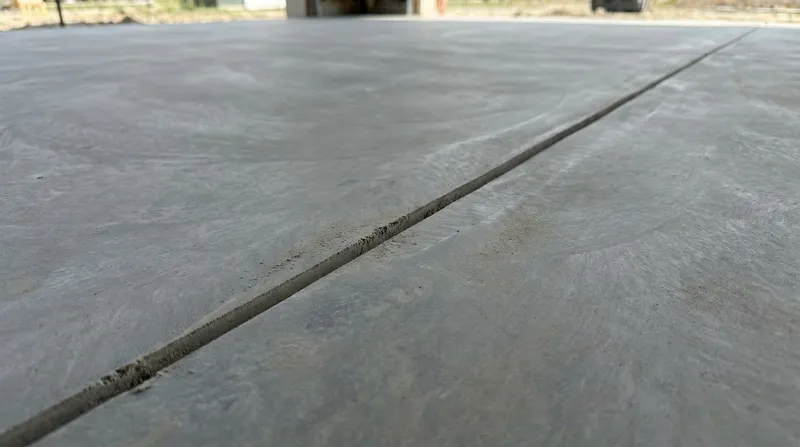
All concrete cracks. We saw-cut 4 to 12 hours after finishing, a quarter of the slab depth, 10 feet apart on a 4-inch slab and 12 on a 5-inch. That decides where the crack goes before the slab does.
Licensed, Insured, and Written Down
Licensed and insured, with a 2-year workmanship warranty and 5 years on structural work. What is not covered — hairline shrinkage cracks — is in the estimate before you sign, not brought up at month six.
We'll Talk You Out of Work
A sunken slab that is otherwise sound gets lifted for $650 to $2,400 instead of torn out at $9 to $13 a square foot. Smaller ticket, right answer. We say so.
Concrete Services We Pour in Huntsville
Four crews run out of our yard: two on flatwork, one on structural and foundations, one on decorative and repair. That is the whole list of what we do, and each one is detailed further down the page with the mix, thickness, and price range we actually quote.
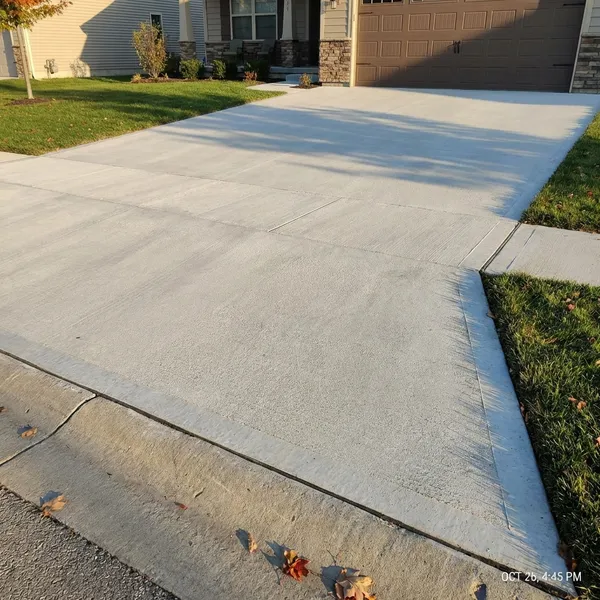
Residential Driveways
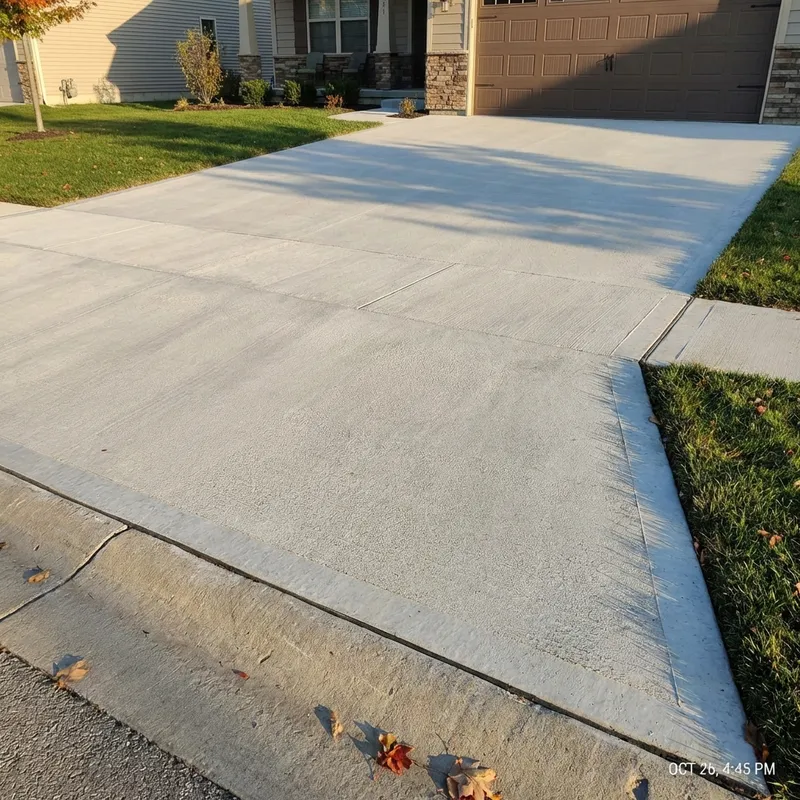
Transform your home's curb appeal with a professionally installed concrete driveway. We pour durable, crack-resistant driveways designed to withstand Alabama's climate and heavy vehicle traffic. Our process includes proper grading, base preparation, reinforcement, and finishing techniques that ensure a smooth, long-lasting surface with optimal drainage.
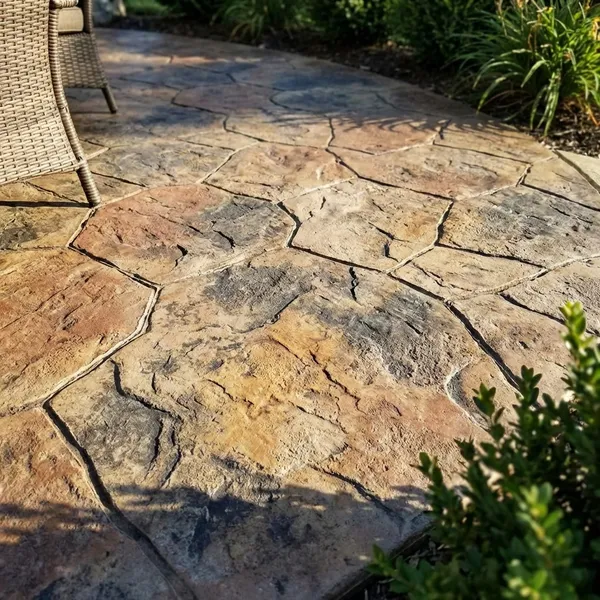
Stamped & Decorative Concrete
Elevate your outdoor spaces with stunning stamped concrete that replicates the look of natural stone, brick, or tile at a fraction of the cost. We offer dozens of patterns and colors to complement your home's architecture. Our decorative concrete techniques include stamping, staining, and custom scoring to create unique, eye-catching surfaces for patios, walkways, and driveways.
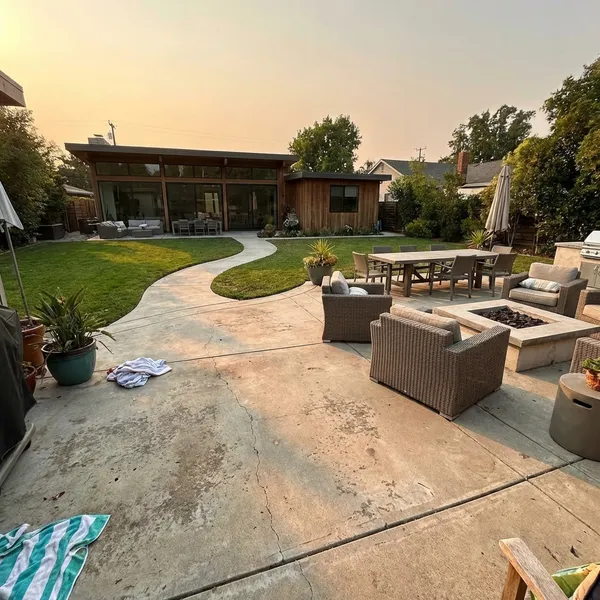
Patios & Walkways
Create the perfect outdoor entertainment space with a custom concrete patio or walkway. We design and install functional, attractive surfaces that extend your living area and enhance your landscape. From simple slabs to elaborate multi-level designs with integrated planters and seating, we build patios that complement your home and lifestyle.
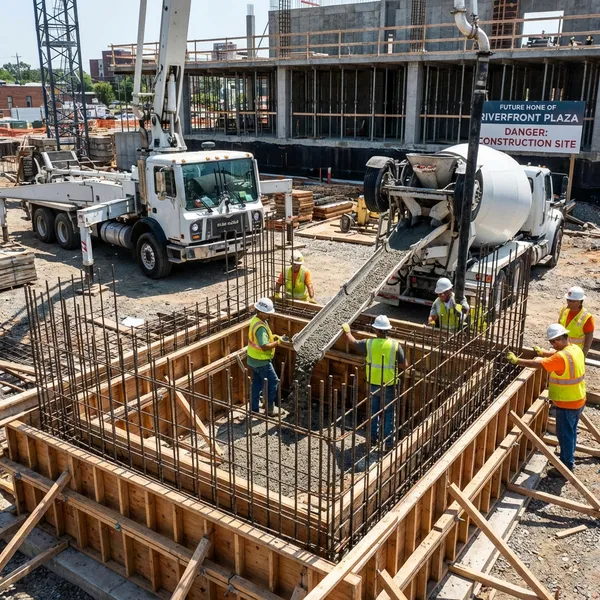
Foundation Work
Build on a solid foundation with our expert concrete foundation services. We pour residential and commercial foundations including slab-on-grade, crawl space, and basement foundations. Our work meets all local building codes and includes proper reinforcement, moisture barriers, and precision leveling to ensure your structure stands strong for generations.
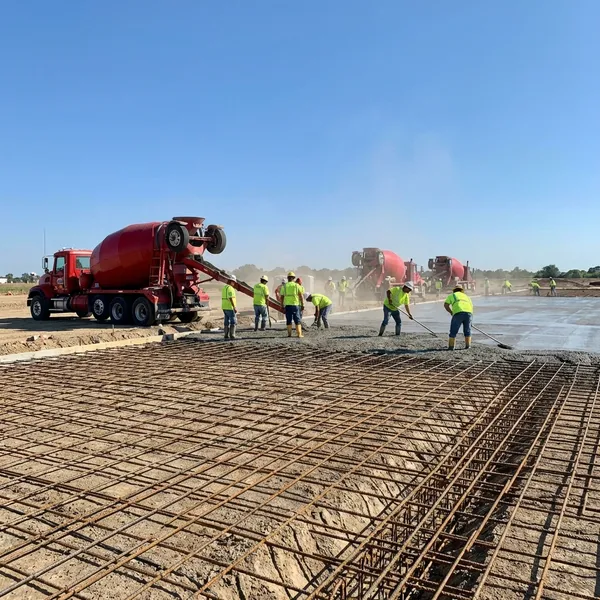
Commercial Concrete Services
From parking lots to warehouse floors, we handle commercial concrete projects of any size. Our experienced crews work efficiently to meet tight deadlines while maintaining the highest quality standards. We specialize in heavy-duty industrial floors, loading docks, sidewalks, curbs, and ADA-compliant ramps that withstand commercial traffic demands.
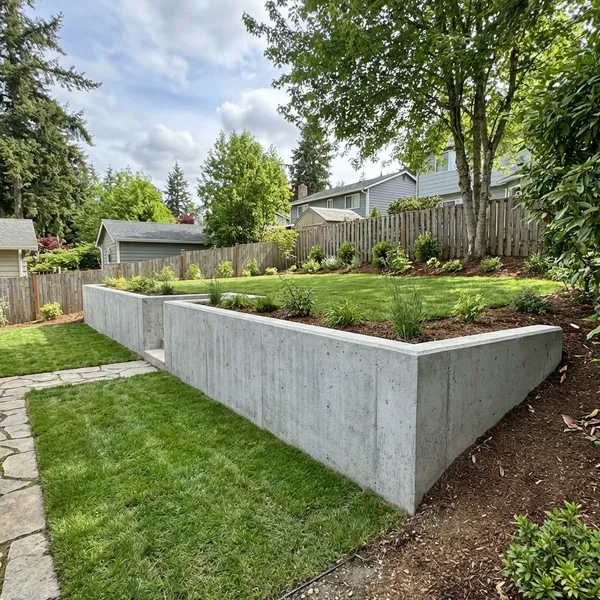
Retaining Walls
Protect your property and create usable terraced spaces with professionally engineered concrete retaining walls. We design and build walls that prevent soil erosion, manage water drainage, and add functional beauty to sloped landscapes. Our walls are reinforced for stability and can be finished with decorative veneers or left smooth for a modern look.
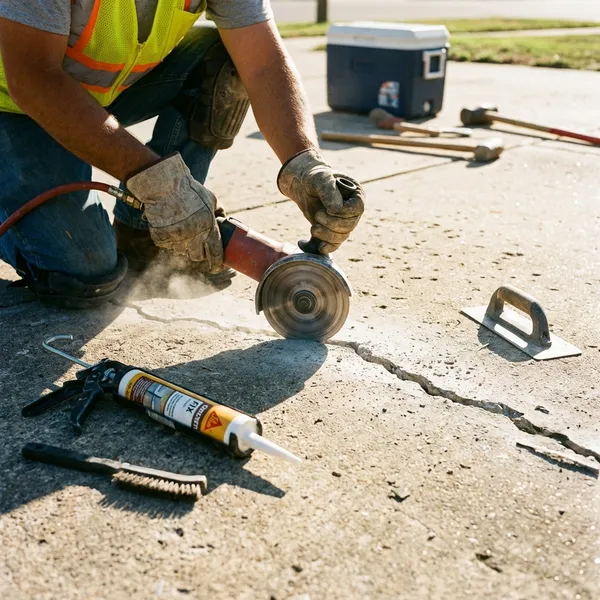
Concrete Repair & Restoration
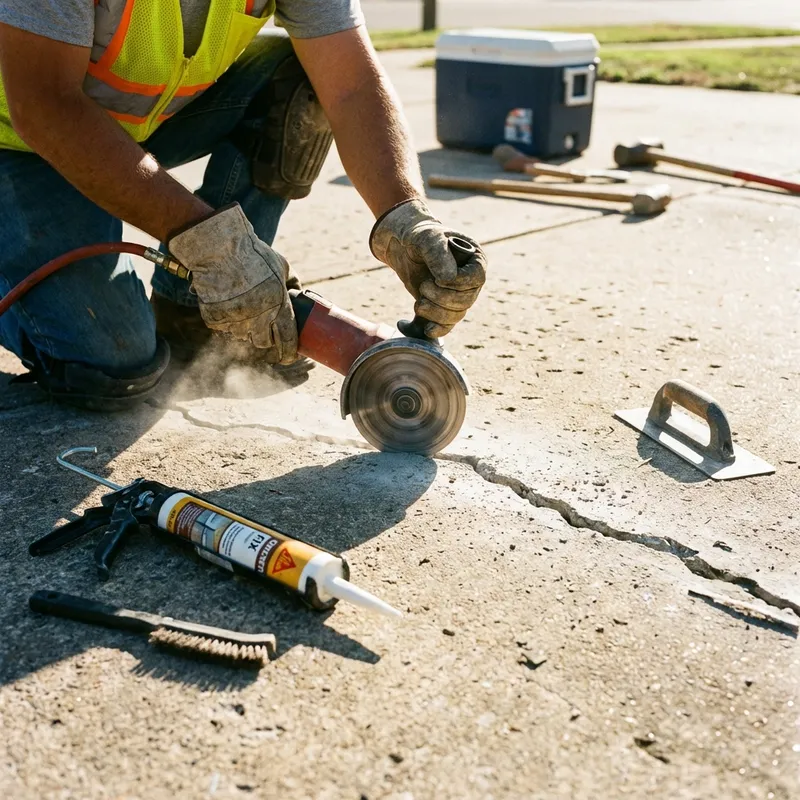
Don't replace damaged concrete when professional repair can restore it at a fraction of the cost. We fix cracks, spalling, settling, and surface deterioration using advanced repair techniques and materials. Our restoration services include crack injection, slab jacking, resurfacing, and sealing to extend the life of your existing concrete surfaces.
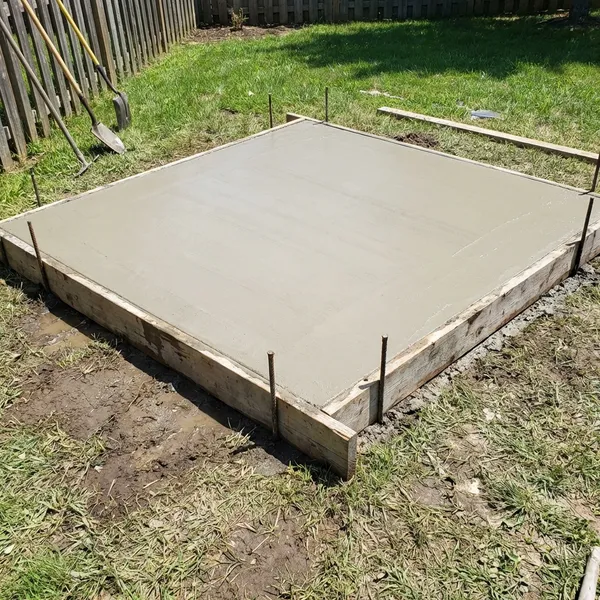
Concrete Slabs
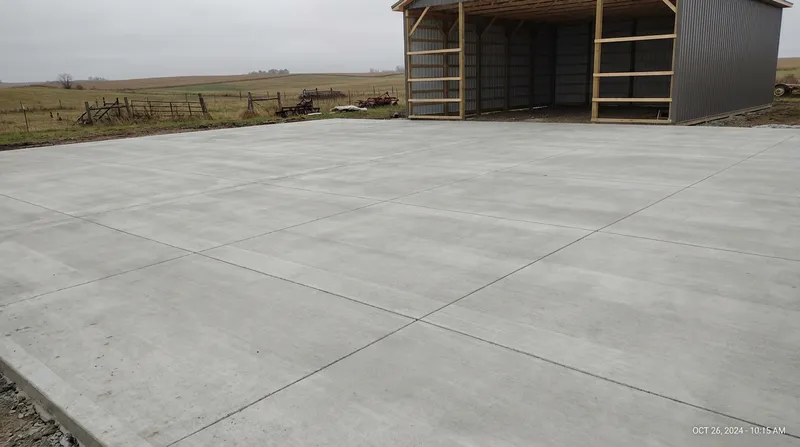
Get a perfectly level concrete slab for your garage, shed, workshop, or outdoor structure. We handle site preparation, grading, base compaction, and reinforcement to ensure a stable, crack-free slab. Our slabs are engineered to support the weight of vehicles, equipment, and structures while resisting settling and movement over time.
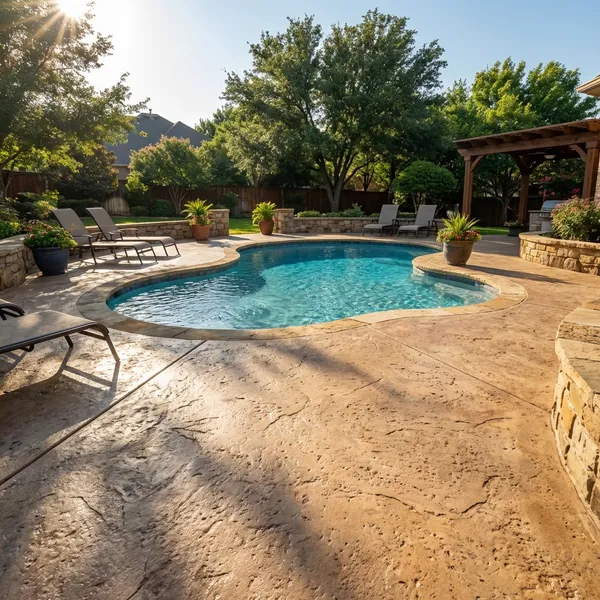
Pool Decks
Enhance your pool area with a beautiful, slip-resistant concrete pool deck. We install decks with proper drainage, expansion joints, and textured finishes for safety around water. Our decorative options include stamped patterns, acid staining, and cool-deck coatings that reduce heat absorption, making your pool deck comfortable barefoot even in summer.
Residential Concrete Contractors in Huntsville and Madison County
Most of our week is residential flatwork — driveways, patios, walks, pool decks, and shop slabs for houses between Hampton Cove and Athens. Below is how each one gets built, what it costs, and where the money actually goes.
Concrete Driveway Installation and Replacement
Most driveways in Madison County fail from the bottom, not the top. The clay under them swells after a wet week and shrinks flat in August. A slab poured on four inches of loose dirt has nothing to hold onto, so it settles, and then it cracks where it settled.
Our residential driveway spec is 5 inches of 4,000 PSI air-entrained concrete with #4 rebar on an 18-inch grid, over 4 inches of crusher run compacted in lifts. Aprons and RV pads go to 6 inches with the rebar tightened to a 12-inch grid, because that is where the heavy wheel loads land.
Tear-out and replacement runs $9 to $13 a square foot including demolition and haul-off. A typical two-car driveway at 600 square feet lands between $5,400 and $7,800. Where you fall in that range depends on how much old concrete comes out and whether the grade needs rebuilding.
We had a house in Blossomwood whose driveway had been replaced twice in nine years, and both times it cracked in the same three places. Eighteen inches down was an old utility trench backfilled with the same soft dirt that came out of it. We dug the trench line out, filled it with crusher run in four-inch lifts, compacted each one, and poured. That was eleven years ago. It is still flat. See our concrete driveway services for the full breakdown.
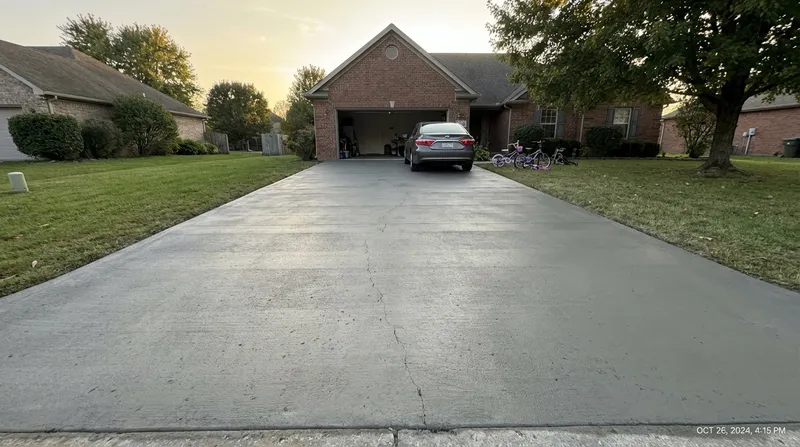
Concrete Patios and Backyard Slabs
A patio carries people and furniture, not trucks, so it does not need driveway steel. We pour 4 inches of 4,000 PSI over 4 inches of compacted #57 stone, reinforced with 6x6 W1.4/W1.4 mesh or fiber depending on the shape and how much of it sits on fill.
Drainage gets decided before the finish does. We pitch a patio away from the house at about a quarter inch per foot and set the control joints at 10 feet on a 4-inch slab. Anything wider than that between joints and the slab picks its own crack line.
A broom-finish patio or walkway runs $8 to $12 a square foot on prepped grade. A 16 by 20 patio — 320 square feet, the size most people end up at — comes in between $2,600 and $3,800. Stamped, the same slab runs $5,100 to $7,700.
If the patio ties into an existing slab, we dowel the joint or isolate it deliberately. Two slabs of different thickness poured tight against each other will move at different rates and spall along the seam within a couple of seasons.
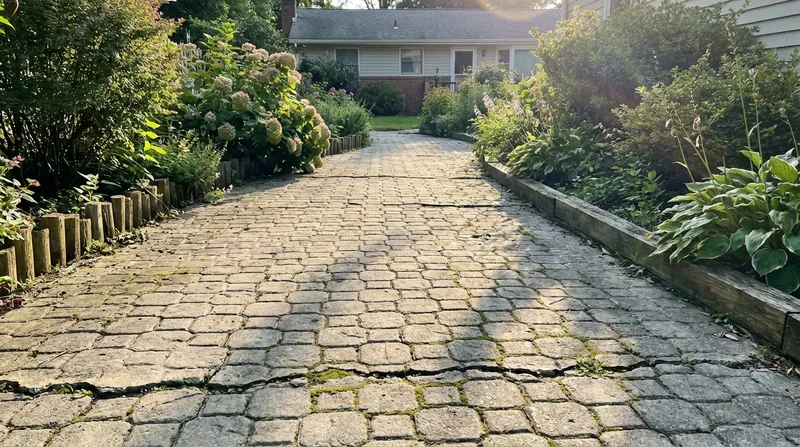
Sidewalks, Front Walks and Concrete Curbing
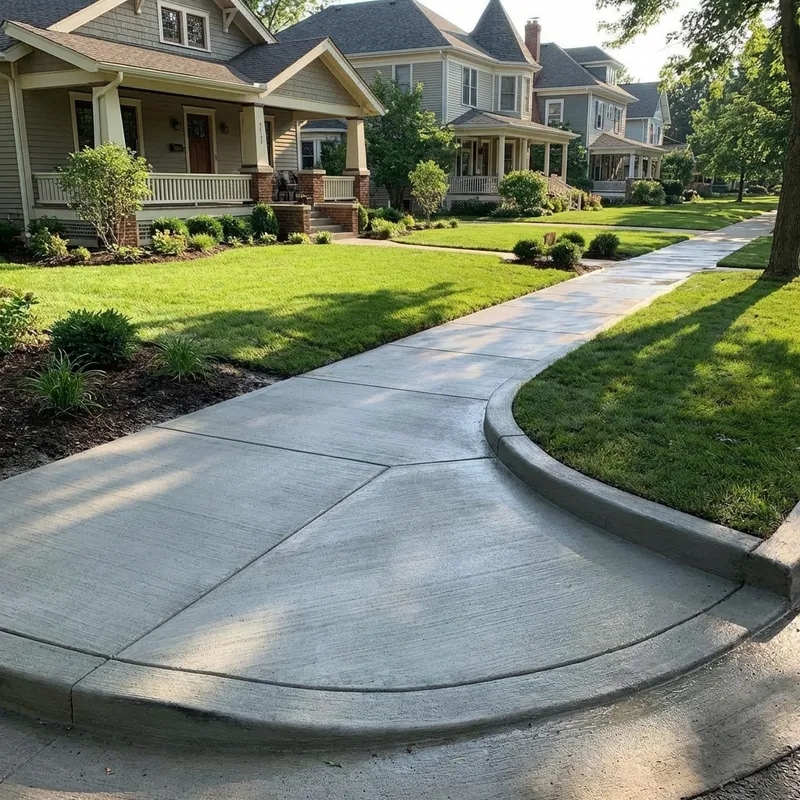
Front walks fail in a specific way: one panel lifts or drops at a joint and you get a lip you catch a toe on. Usually it is a tree root or a section poured over backfill next to the foundation. We take those panels out rather than grinding the lip flat, because grinding treats the symptom and the panel keeps moving.
Walks get 4 inches over 4 inches of compacted stone, with joints spaced to the width so the panels read square. On commercial and municipal work we hold ADA slope and cross-slope and detectable warning placement, which is the part that gets a job rejected at inspection.
Matching an older walk matters in some neighborhoods. In Decatur's Albany district, where the housing stock runs to the 1890s, we replaced a front walk in exposed aggregate with a river-rock blend and a warmer sand, then cut the joint pattern to the original walk's proportions instead of standard spacing. It reads old. It is poured to current spec underneath.
Concrete Pool Decks and Cool-Deck Overlays
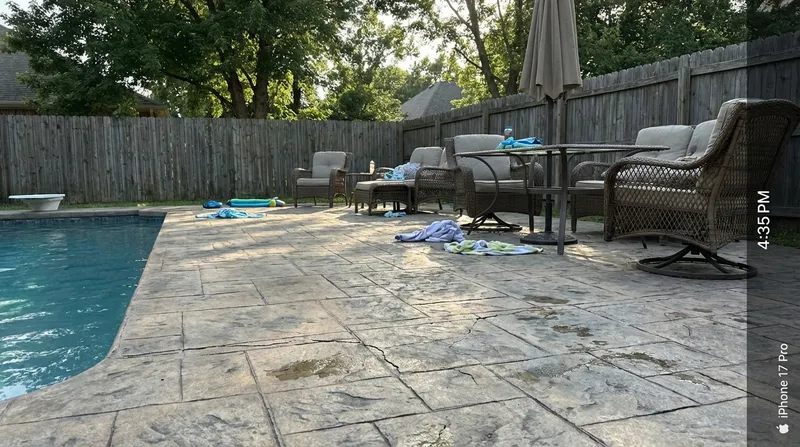
Pool decks are 4 inches of 4,000 PSI air-entrained over 4 inches of compacted #57 stone, with 6x6 mesh and a texture that still has grip when it is wet. Water gets pitched away from the coping, and expansion joints go in at the pool shell so the deck and the shell can move independently.
Skip the darkest colors. A customer once picked charcoal integral color to match his house trim, and by the second week of July his kids could not cross the deck barefoot. We put a light cool-deck overlay over it and he paid twice for one surface. Now we bring a sample board to every pool deck estimate and have people hold the dark one in the sun for thirty seconds first.
A pool deck with a cool-deck overlay runs $14 to $20 a square foot, over a new pour or a structurally sound existing slab. Decorative work gets its first sealer at 28 days, then every two to three years after that.
Garage, Shop and Equipment Slabs
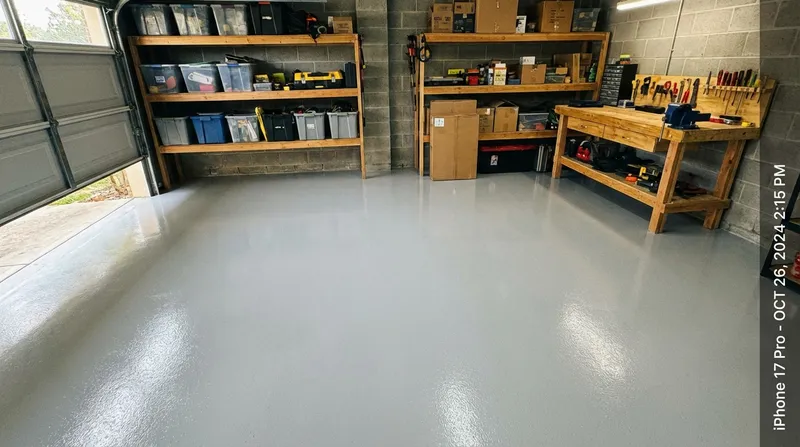
A garage or shop slab is 5 inches of 4,000 PSI with #4 rebar on 18-inch centers, over 4 inches of crusher run and a 10-mil vapor barrier. The vapor barrier is not optional on anything enclosed and heated. Without it, ground moisture wicks up through the slab and takes any coating or floor covering with it.
Barn pads, equipment bases and anything a tractor parks on go to 6 inches of 4,500 PSI with the rebar at a 12-inch grid, over 6 inches of compacted crusher run. Point loads from equipment feet are what break an under-built pad, not the total weight.
Garage and shop slabs run $8 to $11 a square foot including the vapor barrier and steel. There is no minimum job size here — a patch, a single step, a small equipment base, we will take it. Small work does carry mobilization and the minimum concrete order, so the per-foot rate is higher than a driveway. We say that on the phone rather than in the quote.
Poured Concrete Steps and Stoops
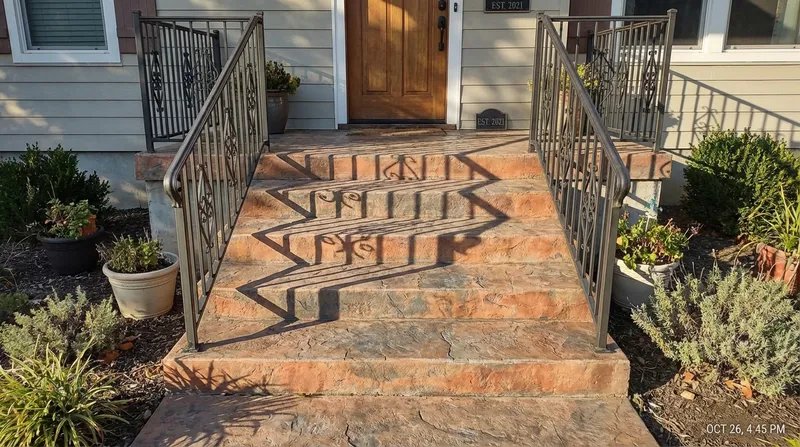
Steps are the piece homeowners put off longest and the piece most likely to be sitting on nothing. A stoop poured over backfill against a foundation settles as that backfill consolidates, and then it pulls away from the house and takes the handrail anchors with it.
We form steps on footings carried down to undisturbed grade, at least 12 inches deep per the Alabama Residential Code, with continuous #4 bar. Riser height stays consistent within a quarter inch top to bottom, because an uneven riser in a run of steps is the one people trip on.
A separated stoop can often be lifted and re-anchored rather than replaced. We check for that first — it is the smaller job and it usually holds.
How Our Concrete Contractors Run a Job, Start to Finish
Five steps, in this order, on every job we take. The timeline below is what we tell people on the phone, and it is what we hold ourselves to.
1. The Measure
Call before 3pm and you get a callback the same business day. We get someone on site to measure within 3 business days.
A quote given without measuring is a number, not an estimate. We need to see the grade, where water goes, what the access is like for a ready-mix truck, and how much old concrete has to come out.
We also look for the things that change the job. Utility trench lines, a downspout dumping at the slab edge, a settling pattern that says something is going on under the base. Better found now than on pour day.
2. Written Estimate and Permits
The written scope lands 48 hours after the measure. It names the thickness, the mix, the reinforcement, the base depth, and the finish, so you can hold another bidder to the same line items.
Prices are ranges until the measure and firm after it. We don't do "starting at."
Foundations, engineered walls and most commercial work need permits, and we pull them. Madison County's building resolutions were updated effective January 2021, and the municipalities each have their own front counter.
Typical lead time to break ground is 2 to 4 weeks. March through May it stretches to 6 to 8 — that is our busy window and we would rather tell you than let it surprise you.
3. Tear-Out, Grade and Base
Old concrete comes out and gets hauled off. Then we cut the subgrade to depth and deal with anything soft we find under it, which is usually the part that decided the last slab's fate.
Base goes down in lifts — 4 inches of crusher run on most residential flatwork, 6 on drive lanes and equipment pads — with a plate compactor over each lift. Not a box blade drag. The difference is invisible the day after the pour and obvious in year six.
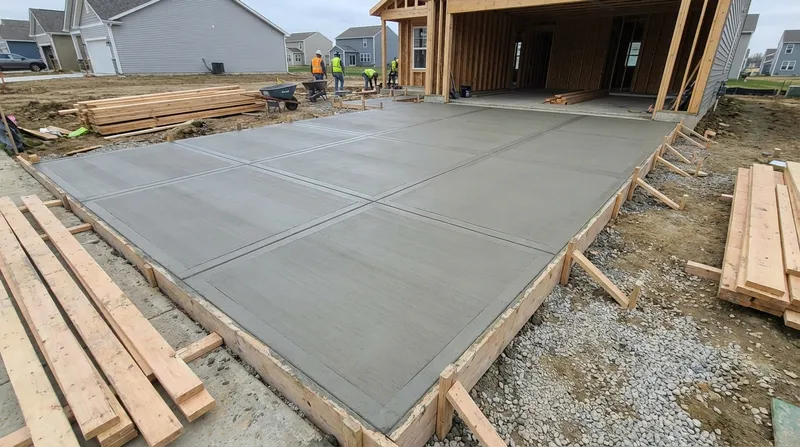
Forms get set and checked for line, depth and slope. Water has to run somewhere, and where it runs is decided here, not later.
This is the step nobody sells because you can't see it once the concrete is on top of it. It is also the step that determines whether the slab lasts.
4. Pour Day and Finishing
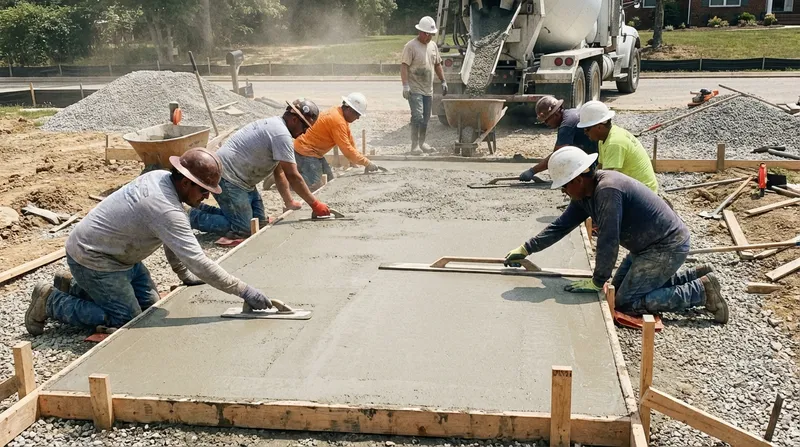
Steel goes in first — #4 rebar on 18-inch centers for driveways and garage slabs, tightened to 12 inches on aprons and commercial work, mesh or fiber on patios and pool decks. It gets chaired up so it sits in the slab, not on the ground under it.
The truck arrives with a 4 to 5 inch slump and nobody adds water at the chute. Every gallon past the design mix buys workability with strength you already paid for.
We screed, bull float, and then wait. Finishing too early traps bleed water at the surface and that is what scales off two winters later. When the slab is ready, it gets the finish you picked — broom, trowel, stamped, or washed for exposed aggregate.
5. Saw Cuts, Curing and Sealing
Concrete doesn't dry, it cures — a chemical reaction that needs moisture and time. We spray an ASTM C309 cure-and-seal the same day so the water stays in the slab instead of leaving through the top.
Control joints get saw-cut 4 to 12 hours after finishing, to a quarter of the slab depth, 10 feet apart on a 4-inch slab and 12 on a 5-inch, 15 feet absolute maximum. Those joints are pre-decided cracks. Cut late and the slab has already picked its own line.
We watch the forecast and will move a pour rather than place concrete that can't hold above freezing through the finish and initial set. We have turned down February work with a closing date attached. The outfit that took one of those jobs watched the surface flake off in sheets that spring, and we did the overlay eighteen months later.
Decorative work gets its first real sealer at 28 days, then every two to three years. We'll tell you when, and we'll come do it if you'd rather not.
Structural and Commercial Concrete Contractors in North Alabama
One of our four crews does nothing but structural work — footings, foundations, engineered walls, and commercial flatwork. Different rules apply than on a patio, and the failures cost considerably more, so this is where the engineering and the inspections live.
Concrete Foundations and Footings
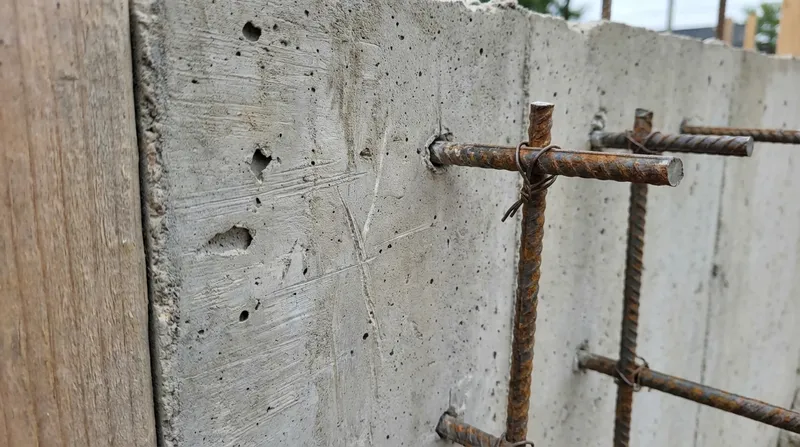
Footings go 12 inches minimum below undisturbed grade, which is the Alabama Residential Code frost depth, with two runs of #4 bar continuous. The word that matters there is undisturbed. A footing bearing on fill is a footing that will settle, however deep it is.
Footings are 3,000 PSI; the slab above them is 4,000 PSI over a 10-mil vapor barrier. We pour slab-on-grade, crawl space stem walls, and additions tying into an existing foundation, and we dowel into the old work rather than butting new concrete against it.
Madison County's building resolutions were updated effective January 2021, and we pull and carry the permits on foundation work rather than leaving them to the homeowner. Structural work carries a 5-year warranty; general workmanship is 2 years.
Poured Concrete Retaining Walls
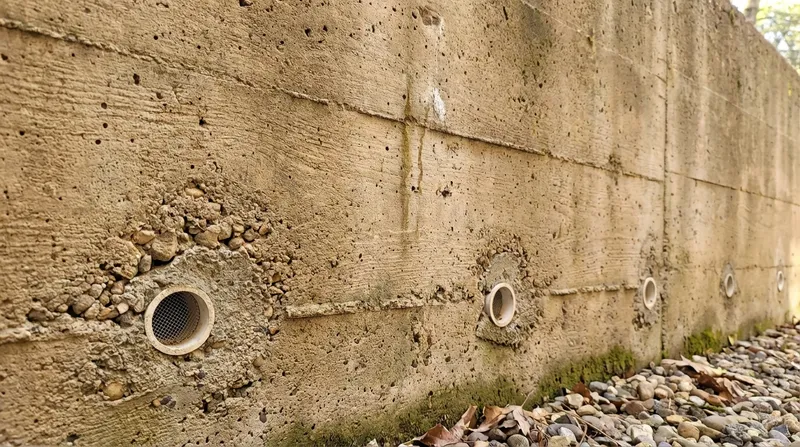
A retaining wall is holding back saturated soil, and around here that soil is clay that gains a lot of weight after a wet week. Anything over 4 feet of retained height gets engineered and permitted. Below that we still design for drainage first.
That means washed stone behind the wall, a perforated drain line at the base daylighted or tied to a catch basin, and weep holes through the stem. Walls do not usually fail from the soil load alone. They fail from the hydrostatic pressure that builds when water has nowhere to go.
Poured walls run $45 to $75 per face foot. On the slopes off Monte Sano and the hillside lots east of town, a wall often buys back a flat, usable piece of yard that was doing nothing but shedding runoff into the driveway.
Commercial Drive Lanes, Dock Aprons and Parking
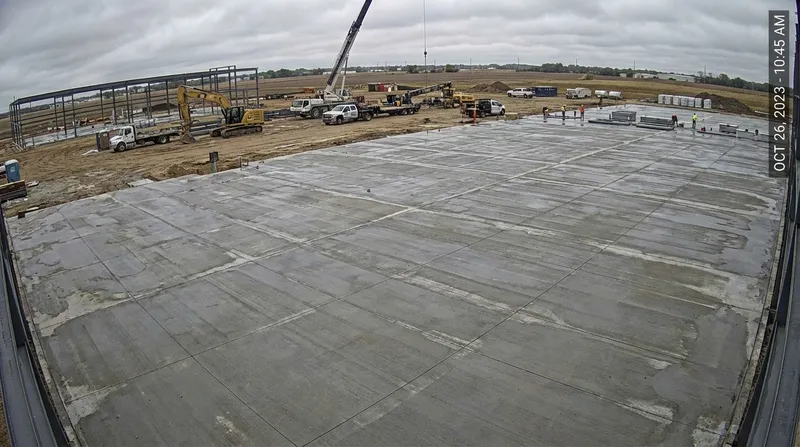
Commercial drive lanes are 7 inches of 4,500 PSI with #4 rebar on a 12-inch grid, over 6 inches of compacted crusher run. Loaded trucks and dumpster trucks are the design load, and a dumpster pad in particular takes point loads no car will ever apply.
We pour warehouse and industrial floors, loading dock aprons, curb and gutter, ADA ramps and sidewalks, and pads for mechanical equipment. Two ride-on power trowels means we can finish a large floor pour on schedule instead of losing the surface waiting on hand crews.
Scheduling around a business that has to stay open is most of the job on commercial work. We stage pours by section, keep an access lane open, and set the tear-out for the days you tell us to. More on our commercial concrete services.
Concrete Repair, Slab Jacking and Resurfacing
Most sunken slabs should be lifted, not replaced. Polyurethane slab jacking runs $650 to $2,400 for an area that would cost $9 to $13 a square foot to tear out and re-pour. If the slab is structurally sound and has only settled, lifting is the honest answer even though it is the smaller ticket.
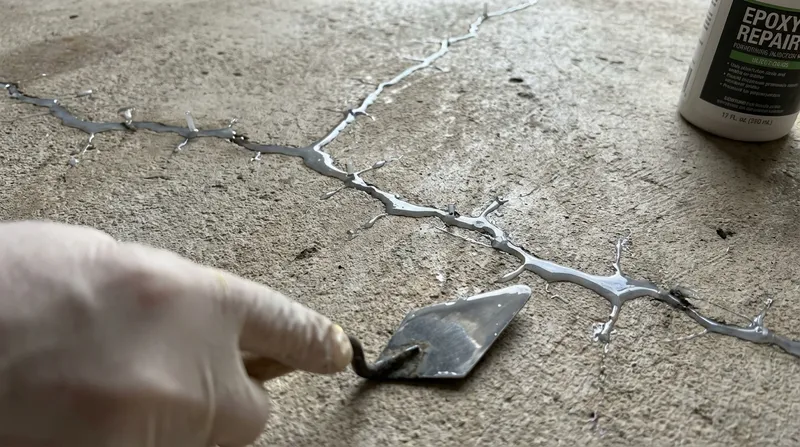
Cracks get routed and sealed at $14 to $22 a linear foot, no minimum length. Resurfacing overlays run $5 to $9 a square foot and we only put them on concrete that is not still moving — an overlay bonded to a live crack telegraphs it back through inside two seasons.
Before any of that, we look for water where water should not be. We once re-poured a Madison driveway twice at our own cost before finding a slow leak on the water service line washing fines out from under the base. The homeowner's water bill had been quietly high for two years. Now checking for that is the first thing we do on localized settling, and it costs nothing to ask.
Decorative Concrete Finishes and What Each One Costs to Own
Finish choice is a maintenance decision as much as a looks decision. Here is the honest trade-off on each one, including the ones that cost you nothing after the pour.
Stamped and Colored Concrete
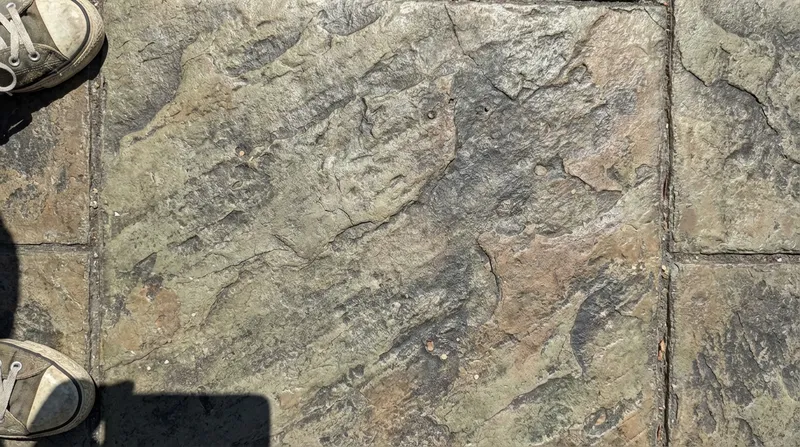
Stamped concrete runs $16 to $24 a square foot — integral color, powdered release, mats pressed while the slab is still green, then sealed at 28 days. Patterns run from ashlar slate and cobblestone through wood plank, and the release color is what keeps it from looking like one flat sheet.
It is a maintenance commitment, not a one-time purchase. Sealer every two to three years, minimum. If that is not something you will keep up with, we would rather point you at exposed aggregate or a broom finish with integral color. Both look fine unsealed, and neither shows wear the same way.
Integral color goes through the body of the concrete, so a chip does not show gray. Surface stains are cheaper up front and thinner in practice. Details on our stamped and decorative concrete page.
Exposed Aggregate Concrete
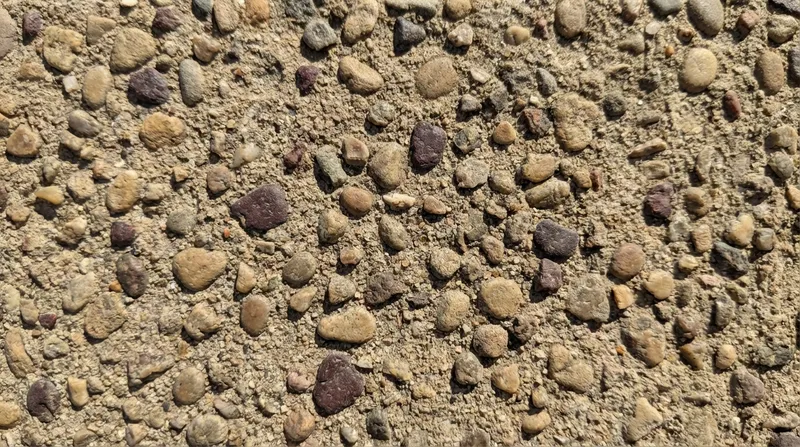
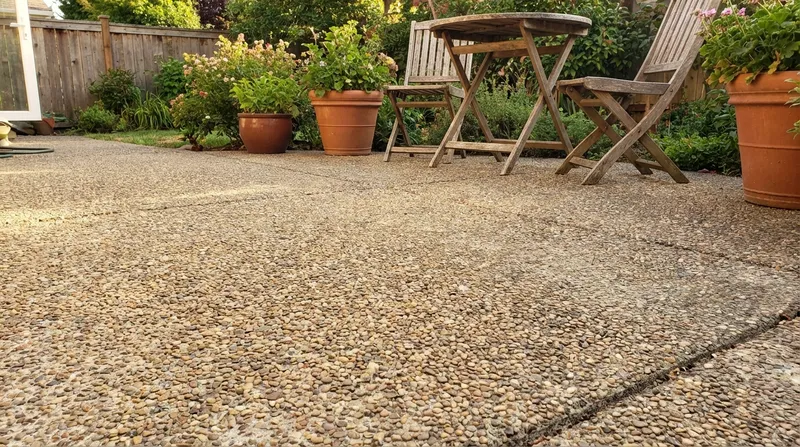
Exposed aggregate runs $12 to $17 a square foot. A surface retarder goes on after finishing, and the top paste gets washed off the next day to reveal the stone underneath. The blend of stone you pick is the whole look, so we bring samples.
It is the most forgiving finish we pour. The texture hides dirt and minor wear, the grip is good wet, and it does not look neglected if you skip a sealing cycle. On older properties it also reads closer to period than a fresh gray broom finish does.
The trade-off is that it is harder to shovel and slightly rough underfoot compared with a troweled surface. On a pool deck we usually pick a finer blend for that reason.
Broom Finish, Troweled Finish and Saw-Cut Patterns
A broom finish is the default outdoors for a reason. The drag of the broom leaves fine ridges that give traction wet, it needs no sealer to look right, and it is the cheapest finish on the price list. Most driveways we pour are broom finished and stay that way for twenty years.
Smooth trowel finishes belong indoors — garages, shops, warehouse floors. Outside they get slick when wet, which is why we will push back if someone asks for a troweled walk.
If you want something more than plain gray without taking on sealing, a saw-cut pattern with integral color gets you most of the way there. We cut a grid or a diagonal into the cured slab and the joints do double duty as crack control.
What We Actually Pour: Mix, Thickness and Steel
Most concrete estimates say "4,000 PSI concrete" and stop there. Thickness, reinforcement and base depth are where the difference between two bids actually lives, so here is our whole spec sheet. Print it and hold every bidder to it.
These are the numbers our crews work to. If a job needs something different, we'll say why in the written scope.
| Application | Mix | Thickness | Reinforcement | Base |
|---|---|---|---|---|
| Residential driveway | 4,000 PSI air-entrained | 5" | #4 rebar, 18" grid | 4" compacted crusher run |
| Driveway apron / RV pad | 4,000 PSI air-entrained | 6" | #4 rebar, 12" grid | 6" compacted crusher run |
| Patio / walkway | 4,000 PSI | 4" | 6x6 W1.4/W1.4 mesh or fiber | 4" compacted #57 stone |
| Pool deck | 4,000 PSI air-entrained | 4" | 6x6 mesh | 4" compacted #57 stone |
| Garage / shop slab | 4,000 PSI | 5" | #4 rebar, 18" grid | 4" crusher run + 10-mil vapor barrier |
| Barn / equipment pad | 4,500 PSI | 6" | #4 rebar, 12" grid | 6" compacted crusher run |
| Commercial drive lane | 4,500 PSI | 7" | #4 rebar, 12" grid | 6" compacted crusher run |
| Footings | 3,000 PSI | 12" min. below undisturbed grade | 2× #4 continuous | Undisturbed soil |
The Details That Don't Fit in a Table
Air entrainment is 6% ± 1.5% per ASTM C260 on anything exposed to weather. Slump is 4 to 5 inches at the truck and stays there — nobody adds water at the chute on our jobs.
Control joints go in at 10 feet on a 4-inch slab, 12 feet on a 5-inch, 15 feet as the absolute ACI maximum. They're saw-cut 4 to 12 hours after finishing at a quarter of the slab depth. A 10-mil vapor barrier goes under anything enclosed and heated, and every pour gets an ASTM C309 cure-and-seal the same day.
Fiber is not a substitute for rebar. Fiber controls plastic shrinkage cracking in the first day and does nothing for structural load or for holding a cracked slab in plane. Anybody selling "fiber instead of steel" on a driveway is saving themselves money, not you.
Concrete Prices in North Alabama, 2026
Everybody wants a number before they'll pick up the phone, so here are ours. These are 2026 installed ranges for North Alabama. Where you land inside a range depends on tear-out volume, access for the truck, how much the grade has to be rebuilt, and the finish.
We don't publish "starting at" prices, because a starting-at price is the one job nobody actually has. A range is honest and it gets firm after we measure.
| Work | Installed range | What's included |
|---|---|---|
| Broom-finish driveway, tear-out and replace | $9–$13 / sq ft | Demolition and haul-off included |
| Broom-finish patio or walkway | $8–$12 / sq ft | New pour on prepped grade |
| Exposed aggregate | $12–$17 / sq ft | Washed finish, sealed |
| Stamped and colored concrete | $16–$24 / sq ft | Integral color, release and seal |
| Pool deck with cool-deck overlay | $14–$20 / sq ft | Over new or sound existing slab |
| Garage or shop slab | $8–$11 / sq ft | Vapor barrier and rebar included |
| Poured retaining wall | $45–$75 / face ft | Engineered above 4 ft |
| Slab jacking, polyurethane lift | $650–$2,400 | Per area, versus $9–$13/sq ft to replace |
| Crack repair, routed and sealed | $14–$22 / linear ft | No minimum length |
| Resurfacing overlay | $5–$9 / sq ft | Only on a structurally sound base slab |
Two-Car Driveway
$5,400–$7,800
600 square feet, tear-out and replace, broom finish.
16×20 Patio, Broom Finish
$2,600–$3,800
320 square feet on prepped grade.
16×20 Patio, Stamped
$5,100–$7,700
Same slab with integral color, stamping and sealer.
There Is No Minimum Job Size
A patch, a single step, a small pad, an equipment base — call and ask. The answer is almost always yes. We have taken jobs a lot smaller than a driveway and we'd take another one.
Small work is priced with mobilization and the minimum concrete order built in, so the per-square-foot rate comes out higher than it does on a full driveway. That's the honest reason a 40-foot pad isn't one-fifteenth the price of a 600-foot driveway. You'll see it in the quote before you agree to anything.
Why Concrete Behaves Differently in Madison County
Concrete is the same everywhere. The ground under it is not. Four things about North Alabama change how we build, and they're the things out-of-town crews consistently miss.
Shrink-Swell Clay Moves Slabs Both Ways
The soil across most of the valley is clay sitting over limestone. It takes on water and expands, then dries out in August and shrinks back. A slab bedded straight on that clay gets lifted and dropped through every season.
Compacted crusher run is what breaks that connection. It spreads the load, it drains, and it doesn't change volume with moisture. Four inches of it under a driveway costs a few hundred dollars and buys you twenty years.
Limestone Karst, Caves and Voids
Madison County sits on limestone, and limestone dissolves. Caves and sinkholes are normal here, not exotic. That matters the day a slab starts settling in one spot while the rest of it stays dead flat.
Uniform settling is a base problem. A single low corner with sharp edges is usually something under the base. We had a garage slab east of town with one corner an inch and a half low and everything else true — we didn't pour anything, we told the owner to get the ground looked at first.
A contractor who pours over a localized void is selling you a second failure at full price.
54 Inches of Rain and Shallow Freeze Cycles
Huntsville takes more than 54 inches of rain a year and averages 2.4 inches of snow. People use that snow figure to argue against air-entrained mix. It's the wrong problem.
Saturated concrete that goes through a shallow freeze is what scales — the top eighth-inch flakes off in sheets. Entrained air gives the water somewhere to expand into. We run 6% ± 1.5% on everything exposed, and it costs almost nothing on the ticket.
The same rain is why we won't place concrete when the forecast can't hold above freezing through the finish and initial set. Concrete that freezes before it sets never develops a durable surface, and no sealer fixes it afterward.
Drainage Gets Designed Before the Finish Gets Picked
Sites near the Flint River out toward Brownsboro sit low and flood periodically. Anything on a floodplain gets its drainage worked out before anybody opens a color chart.
We talked a homeowner out there out of a stamped driveway once. His gravel drive had standing water in three spots. He got a broom finish, a re-graded crown, a French drain along the uphill side, and about $4,000 back in his pocket.
A stamped pattern under two inches of standing water is just an expensive puddle. We'd rather lose the decorative upsell than pour a pretty slab that sits in water.
When Can You Use It? Cure and Load Times
This is the question we get more than any other, so here is the whole schedule. Concrete keeps gaining strength for years, but these are the marks that matter to you.
- 24–48 hrs Foot traffic. Stay off the edges and don't drag anything across it.
- 7 days Bicycles, patio furniture, walking the dog.
- 10 days Passenger vehicles. Park in the middle of the slab, not on a corner.
- 28 days Loaded trucks, dumpsters, RVs and moving vans. Also full design strength.
- 28 days + First sealer on decorative work, then every 2 to 3 years.
Our Warranty, Including What It Doesn't Cover
Workmanship is warranted 2 years. Structural work — footings, foundations, engineered walls — is warranted 5 years. Both are in writing in the estimate, not implied on a website.
Hairline shrinkage cracks are not warranted, and we tell you that before the pour rather than arguing about it at month six. All concrete cracks. What a good contractor controls is where, and that's what control joints are — cracks we decided on in advance.
When something is our fault, we come back. We tore out and re-poured a section of a Madison driveway at our cost, then did it again fourteen months later, before we dug deep enough to find the leaking water service line that had been washing the base out the whole time.
Two free pours to learn one lesson. Now the first question on any localized settling is whether there's water where water shouldn't be.
What Our Clients Say
4.8 stars across 214 Google reviews.
"The driveway they installed looks fantastic and has held up perfectly through multiple Alabama winters. Top-notch craftsmanship!"
"We're thrilled with our stamped patio. The pattern and color turned out even better than we imagined. Great crew to work with."
"Completed our warehouse floor pour ahead of schedule with zero issues. Professional team that knows commercial concrete inside and out."
Our Service Areas in Huntsville and North Alabama
Huntsville Superior Concrete serves surrounding areas to Huntsville, AL, including Madison, Athens, Decatur, Hartselle and Brownsboro.
We also work Harvest, Meridianville, Owens Cross Roads, New Market, Toney, Gurley and Hazel Green. Our radius is about 45 minutes from the yard on Bailey Cove Road, which is a scheduling limit, not a marketing one — past that we can't get a crew back for a warranty call the same day.
Huntsville, AL
Madison, AL
Athens, AL
Decatur, AL
Hartselle, AL
Brownsboro, AL
Huntsville
Our home ground since 1957, back when the Arsenal was pulling engineers into town faster than anyone could build ranch houses for them. Huntsville is the largest city in Alabama now — around 233,600 people — and the work splits between replacing 1960s driveways in Five Points, Blossomwood and south Huntsville, and new flatwork in the Hays Farm and MidCity build-outs. Older neighborhoods almost always turn up a surprise under the old slab. Newer ones are mostly a grading question.
Madison
Madison has grown to roughly 64,000 and Town Madison and Clift Farm keep pulling it. A lot of our Madison work is second-owner: a 15-year-old driveway on a thin slab that has started settling at the apron where the delivery trucks turn. Sitting at 686 feet, drainage off the newer subdivisions runs hard, and we spend more time on grade there than almost anywhere else.
Athens
Athens was incorporated in 1818, a year before statehood, and the antebellum housing stock in the central historic districts needs a lighter touch than a fresh gray slab. We match joint patterns and use warmer finishes on those front walks. Out toward Browns Ferry and the I-65 corridor it is the opposite job — shop slabs, equipment pads, and commercial drive lanes built for loaded trucks.
Decatur
Decatur has the largest Victorian-era home district in Alabama, and in Albany and Old Decatur the finish decision matters as much as the pour. Exposed aggregate with a river-rock blend reads right against a house from the 1890s where a broom finish would not. On the industrial side — the plants along the river, the busiest port on the Tennessee — the spec goes the other way: 7 inches, 4,500 PSI, rebar at 12 inches.
Hartselle
Hartselle is 34 miles down I-65 from us, exits 325 and 328, and it is still an easy day for a crew. The town grew up around the railroad in 1869 and the downtown historic district went on the National Register in 1999. Lots out that way run larger, so we pour more barn pads, equipment bases and long driveways there than we do inside Huntsville.
Brownsboro
Brownsboro is unincorporated Madison County at about 620 feet, with the Flint River running through it. The river floods periodically, and on those lots the drainage plan comes before anything else — crown, French drain, and where the water is going to go in a bad week. We have talked more than one homeowner out there out of stamped concrete and into a broom finish plus a drain, and been right to.
Your neighborhood not listed? We work with clients across North Alabama. Get in touch to discuss your concrete needs!
Call (256) 666-2391Frequently Asked Questions
Cost and Estimates
How much does a concrete driveway cost in Huntsville? ▼
$9 to $13 a square foot for tear-out and replacement, demolition and haul-off included. A typical two-car driveway at 600 square feet comes in between $5,400 and $7,800. Where you land depends on how much old concrete comes out, whether the grade has to be rebuilt, and how easily a ready-mix truck can get to the pour.
Do you provide free estimates? ▼
Yes, and they're written. We measure on site within 3 business days, then send a scope 48 hours later naming the thickness, mix, reinforcement, base depth and finish — so you can hold another bidder to the same line items. A quote given without measuring the site is a number, not an estimate.
Is there a minimum job size? ▼
No. A patch, a single step, a small pad, an equipment base — call and ask, and the answer is almost always yes. Small work does carry mobilization and the minimum concrete order, so the per-square-foot rate is higher than on a full driveway. That's in the quote before you agree to anything.
Should I repair my concrete or replace it? ▼
If the slab is structurally sound and has only settled, lift it. Polyurethane slab jacking runs $650 to $2,400 for an area that would cost $9 to $13 a square foot to tear out and re-pour. If the slab is broken into pieces that move independently, or the base underneath is gone, replacement is the only honest answer. We'll tell you which one you have.
Thickness, Mix and Cracking
How thick should a concrete driveway be in North Alabama? ▼
Five inches, not four. Code allows 4 inches for residential, but the shrink-swell clay under Madison County moves enough that 4 inches is a driveway that hasn't failed yet. Aprons and RV pads get 6 inches. The extra inch adds roughly 12% to the concrete cost, which is the cheapest insurance on the whole job.
Why is my concrete cracking? ▼
All concrete cracks — anyone who promises otherwise is lying to you. What a good contractor controls is where. That's what control joints are: cracks decided in advance, saw-cut 4 to 12 hours after finishing at a quarter of the slab depth, 10 feet apart on a 4-inch slab. Cracks that wander outside the joints usually mean the base moved, the joints were cut late or too far apart, or water was added at the chute.
What's the difference between stamped and regular concrete? ▼
Same slab underneath. Stamped concrete gets integral color and a powdered release, then mats are pressed into it while it's still green to leave a stone, slate or plank texture. It runs $16 to $24 a square foot against $8 to $12 for a broom finish, and it needs resealing every two to three years. A broom finish needs nothing.
Does stamped concrete need resealing? ▼
Yes — first sealer at 28 days, then every two to three years. Stamped concrete is a maintenance commitment, not a one-time purchase. If that isn't something you'll keep up with, get exposed aggregate or a broom finish with integral color instead. Both look fine unsealed and neither shows wear the same way.
Timing, Curing and Scheduling
How long does concrete take to cure? ▼
Foot traffic at 24 to 48 hours. Bikes, patio furniture and the dog at 7 days. Passenger vehicles at 10 days — park in the middle of the slab, not on a corner. Loaded trucks, dumpsters, RVs and moving vans at 28 days, which is also full design strength.
How soon can you start? ▼
Call before 3pm and you get a callback the same business day. We measure within 3 business days and the written estimate follows 48 hours after that. Typical lead time to break ground is 2 to 4 weeks, stretching to 6 to 8 weeks March through May. Anyone offering to pour your driveway this week because they "were in the neighborhood" doesn't have eight yards of ready-mix riding around looking for a home.
What's the best time of year to pour concrete in Alabama? ▼
Spring and fall are easiest, which is also why March through May is our busiest window and lead times stretch to 6 to 8 weeks then. Summer pours are fine with an early start. We won't place concrete when the forecast can't hold above freezing through the finish and initial set — concrete that freezes before it sets never develops a durable surface, and no sealer fixes that later.
Permits, Licensing and Warranty
Do you pull permits? ▼
Yes. Foundations, engineered retaining walls over 4 feet, and most commercial work need permits, and we handle them rather than leaving them with you. Madison County's building resolutions were updated effective January 2021, and each municipality runs its own counter. Plain residential flatwork replacement usually doesn't need one, but we check before we schedule.
Are you licensed and insured? ▼
Yes — licensed and insured, with liability coverage on every job and all work to current Alabama Residential Code and Madison County building resolutions. We're happy to send certificates before we start.
What's covered by your warranty? ▼
Workmanship is warranted 2 years. Structural work — footings, foundations, engineered walls — is warranted 5 years. Hairline shrinkage cracks are never warranted, by us or by anyone honest, and we say so before the pour rather than at month six.
How long have you been in the concrete business? ▼
Since 1957 — 69 years and 12,600 logged pours across North Alabama. Ray's grandfather started it with one mixer and a Ford, pouring driveways for the ranch houses going up south of town. Third generation now, 19 people, 4 crews, same few miles of south Huntsville. We're happy to show you work in your neighborhood.
Service Area
What areas do you serve? ▼
Huntsville, Madison, Athens, Decatur, Hartselle and Brownsboro, plus Harvest, Meridianville, Owens Cross Roads, New Market, Toney, Gurley and Hazel Green. Roughly 45 minutes from our yard at 7902 Bailey Cove Rd SE. That limit exists so we can get a crew back out for a warranty call the same day.
Do you handle site preparation and cleanup? ▼
Yes — tear-out, haul-off, excavation, grading, base in compacted lifts, and cleanup. We own the skid steer, the mini excavator and the trucks, so none of it gets subbed out or added on later. The site is clean at the end of each day, not just at the end of the job.
Are you searching for 'Concrete Services near me'? ▼
If you've been searching for Concrete Services near me in Huntsville, AL, you've found the right team. Huntsville Superior Concrete is a locally based Concrete Services contractor serving Huntsville and the surrounding area. Call us at (256) 666-2391 or request a free quote — we respond fast.